
Rancho Palos Verdes Neighbor Sources
A Rancho Palos Verdes neighbor lookup should begin with the source that matches the question. The Los Angeles County Assessor Portal is the primary parcel route for an incorporated RPV address. It can connect a street location to a parcel, AIN, situs, legal description, and property facts. Other sources add a permit event, a recorded transfer, a date-specific household, or a voluntary community contact. None is a complete list of everyone on a block.
| Source | What It Shows About a Block | Access |
|---|---|---|
| Assessor parcel map | Target parcel, touching geometry, adjacent AINs, and parcel pattern | Free map click and browse |
| Parcel detail | Situs and nonoccupant property facts, with a parcel record key | Free individual parcel page |
| City permits and code records | Address-specific work, cases, inspections, and status clues | Recent portal or CPRA request |
| Recorded deeds | Owners and transfers for selected parcels | Norwalk index or paid copies |
| Historical reverse or phone books | Listed subscriber at an address when the volume supports that mode | PVLD, with staff confirmation of years |
| Census through 1950 | Date-specific household at an enumeration address | NARA or library database |
| Neighborhood Watch | Voluntary block connection and preparedness network | Join or contact, no public roster promised |
A parcel fact is not an occupancy fact. A deed establishes a recorded ownership act. A mailing label can point to an owner’s correspondence address. A permit can name an applicant or contractor. A telephone book can name one listed subscriber. A census captures a household on one enumeration date. Those distinctions keep a neighbor search from turning a clue into a claim.
Map a Rancho Palos Verdes Block
The primary city parcel method follows geometry, not house-number guesses. Winding streets, private drives, vacant lots, condominiums, and Palos Verdes Drive segments can break the apparent order of addresses. Start with the Assessor map, save the target parcel’s ten-digit AIN, and build a short source-and-date table for each nearby parcel.
- Normalize the street address, including direction and unit, then locate it in the Assessor Portal Basic Search.
- Zoom until parcel boundaries and labels appear. Open the target parcel and save the AIN, situs, legal description, and record date.
- Click each parcel that physically touches the target. Do not assume the next street number is the next neighbor.
- Repeat across the street where the parcel geometry shows a related frontage or lot, and keep each AIN in its own row.
- Compare selected owner, deed, permit, or historical clues without treating any one result as proof of occupancy.
The flow is simple: address, target parcel, AIN, touching parcels, source dates, then a careful role check. A radius is geometry. It does not show that people know one another or share a community.
For a full named street and its longer address chain, use the Rancho Palos Verdes street directory. The block method stays focused on the immediate parcels around one address.
GIS-NET's Scope Beyond RPV
GIS-NET documents useful county mapping mechanics, including search by AIN, address, or intersection; community lists; layer toggles; identify and query tools; buffer; tract and parcel-map queries; draw, measure, export, report, print, and PDF functions; aerial imagery; oblique imagery; and Street View. Those tools can help explain how a parcel study works.
The documented GIS-NET coverage is primarily unincorporated Los Angeles County. It is not the authoritative parcel source for incorporated Rancho Palos Verdes. Use the Assessor map to anchor RPV parcels, and use city planning maps and records for city-specific planning questions. A buffer drawn in a county viewer is a geometric study area, not a certified list of RPV neighbors.
That scope limit matters when a viewer offers a tempting export or report button. A clean export can still reflect the wrong jurisdiction, layer, or date. Save the source name and date with each parcel note.
Owners Are Not Always Neighbors
Los Angeles County parcel records separate several address roles. Situs identifies the taxed physical location. Mailing identifies where an owner receives correspondence. The legal description identifies the land through a tract, lot and block, or metes-and-bounds description. A trust, PO box, agent, or absentee owner can make the mailing address differ from the situs.
Recorded deeds show grantor, grantee, date, document reference, and legal continuity. They do not show every person who lives at the parcel. A permit applicant, contractor, tax addressee, former owner, relative, and current household member can all be different people. Neighbor research is stronger when each name carries a role and a date.
Commercial neighbor tools may combine parcel, marketing, directory, and broker data, then collapse those roles into one suggested household. Such a lead needs an official source and a current date before it is used for anything personal or civic.
Rancho Palos Verdes Permit and Code Records
City permits and code files are address-specific. Current E-Trakit information can show inspection results, issuance status, and a short work description. It may identify an applicant or contractor, which dates a project without establishing who occupied the parcel. Detailed PDFs, original permit files, and older material require an in-person or City Clerk request.
Code enforcement does not advertise a separate public name index. A request by street address and date range can seek existing case material. The city’s tracking examples show fields such as property address, case or violation ID, description, opened and closed dates, status, complaints, photos, and correspondence, subject to exemptions and redactions.
The city permit-record instructions describe recent online access. For older or full files, the Rancho Palos Verdes public-record request channel accepts a defined record request under the California Public Records Act. Ask for an existing address file, not a newly compiled block roster.
Rancho Palos Verdes Voter Checks
The LA County voter self-verification form is not a public name browse. Every field is required: last name, birthdate, house number, and five-digit ZIP. A successful self-lookup can confirm the supplied person’s registration status and election information. It cannot enumerate everyone on a Rancho Palos Verdes street, and a failed match can reflect spelling, a recent move, cancellation, or a mismatched house number.
California Elections Code section 2194 makes voter-registration information confidential at large and limits access to specified election, scholarly, journalistic, political, or governmental purposes. Section 2188 governs affidavits and records. Section 18109 penalizes unauthorized use. Social Security numbers, driver-license or state-ID numbers, and signatures are protected. A voter file is not permission to publish a block roster.
Qualifying requesters can order voter or election files through the county purchase-order process, a selected geography, a permitted purpose, and a statutory declaration. Published prices are $146 countywide, $54 for a precinct, district, or city file, and $39 for each additional file. That controlled route is different from a self-check and does not turn ZIP into an open neighbor directory.
Neighborhood Watch Connects Rancho Palos Verdes Streets
Rancho Palos Verdes Neighborhood Watch began in 1992. The city reports participation on about 90 percent of single-family streets. Its structure uses a coordinator, area coordinators, and block captains to distribute Sheriff information and preparedness training. That makes the network a useful human route for getting to know a block and sharing safety information.
The public access point is join or contact information, not a member directory. Participation does not prove that every household on a street belongs, and a block-captain contact should not be scraped into a list of private residents. Use the voluntary channel for a community connection, a preparedness question, or a lawful neighborhood concern.
The city’s Neighborhood Watch page is the appropriate place to check current contact and joining information.
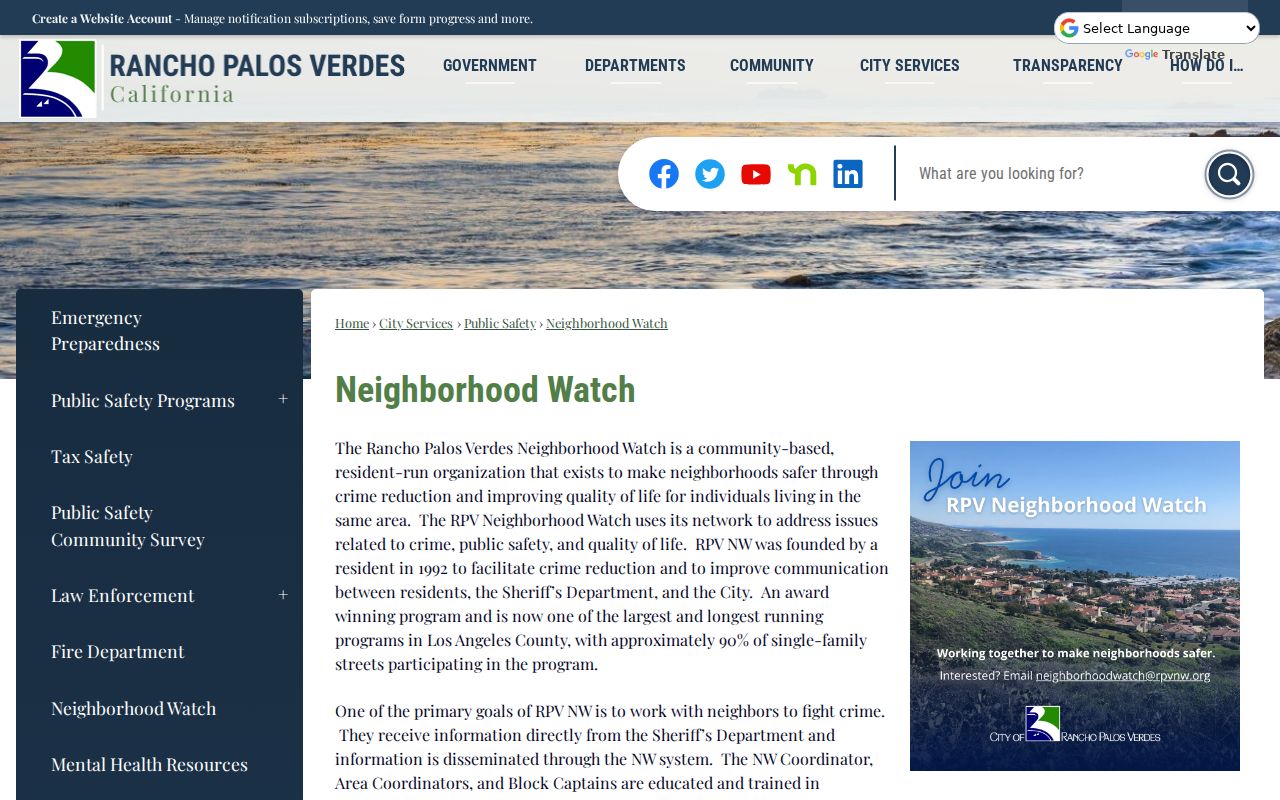
The public description shows a community network and its access route, not a public list of Rancho Palos Verdes neighbors.
Rancho Palos Verdes Association Contacts
The city’s Neighborhood Beautification grant history names associations and community groups that have carried out local activity. A grant record proves that an organization appeared in a city program. It does not prove present membership, a current officer, or every address in an association. Contact and roster details remain private unless the group chooses to publish them.
| Association or group named in grant history | What the public record supports | Contact route |
|---|---|---|
| Grandview Country Club Grandview Estates Grandview Silver Arrow | Named community activity in the city grant history | Group’s voluntary contact or city records route |
| Island View Island View Terrace La Pointe La Cresta | Named association activity, not a membership roll | Ask the group or use published city information |
| La Cresta Pointe La Vista Verde Ladera Linda | Grant-history reference to local organization | Private association channel if one is offered |
| Lunada Pointe Mediterrania Mesa Palos Verdes Miraleste Homes | Named neighborhood activity, not proof of current residents | Voluntary group contact, not a scraped roster |
Rancho Palos Verdes transparency records provide a public starting point for city contracts, grants, and related records.
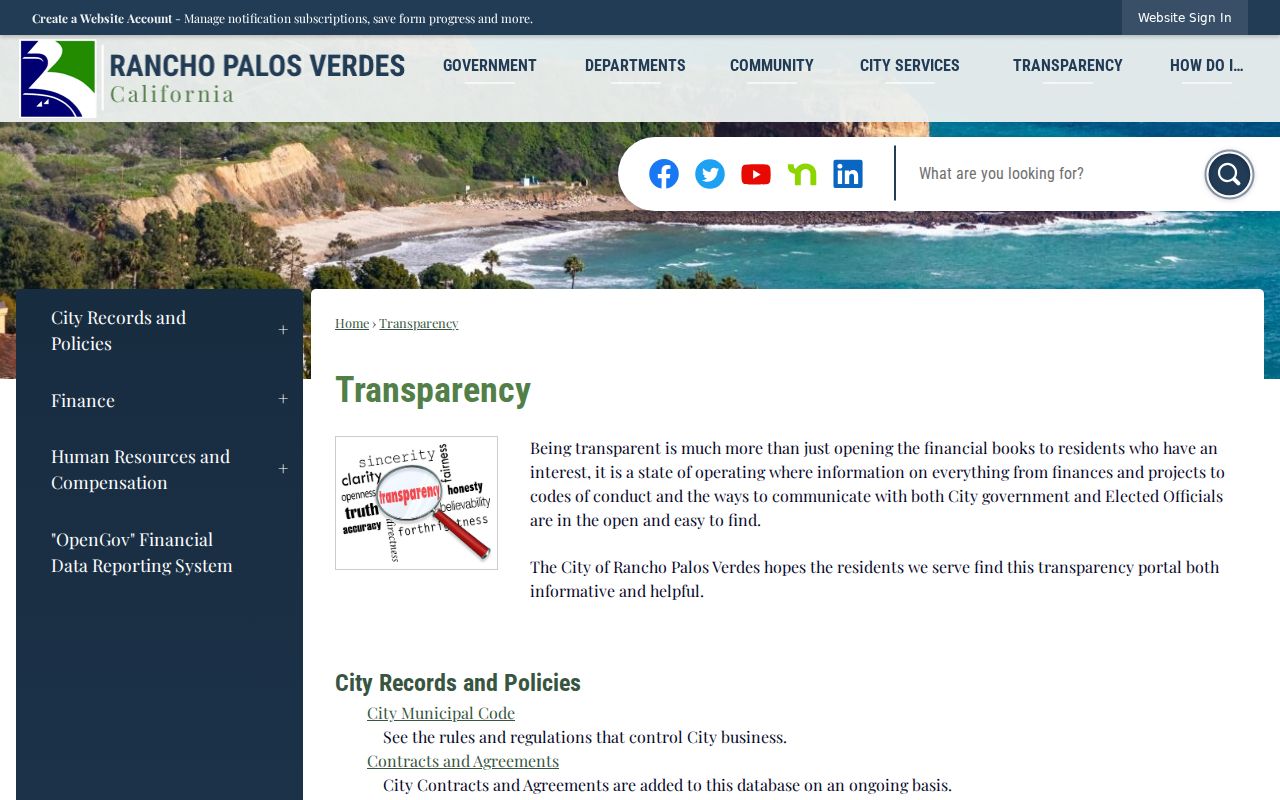
Public grant activity can help identify a community contact without exposing a private association directory.
Rancho Palos Verdes Census Through 1950
Census schedules through 1950 can show a date-specific household, ages, relationships, and an enumeration address. That evidence belongs to the census date. It should be compared with parcels and street labels from the same era, since a modern ZIP, city name, or tract label may not appear in the older schedule.
Palos Verdes Library District materials add early telephone books, newspapers, maps, yearbooks, and genealogical notebooks. Historical reverse or phone-book access needs staff confirmation because the exact reverse-directory run is not published. A listed subscriber may be one adult, while a census entry captures the household counted on one date.
For a reunion or family-history question, the useful path is a dated address clue, a matching parcel or tract, and two independent records. A gap between census dates is a gap in observation, not proof that a household left.
Official and Commercial Neighbor Leads
Neighbor-search categories answer different needs. Official sources are narrower but show their custodian, field, and date. Community sources can connect people without publishing names. Commercial tools may be fast, but their combined records can be stale or misassigned. Treat the last category as an unverified lead only.
| Category | Useful strength | Limit for Rancho Palos Verdes neighbors |
|---|---|---|
| Official parcel and city records | Address, AIN, property clues, permits, and case dates | Title, applicant, or case data does not prove occupancy |
| Recorded deeds and historical books | Transfers, listed subscribers, and date-specific past households | Norwalk access, PVLD confirmation, and era limits apply |
| Voluntary block or association channels | Human contact, preparedness, and community context | No public member roster is promised |
| Commercial neighbor-search category | May combine several public or licensed data feeds | Owners, former residents, relatives, and addresses can be collapsed or stale |
Keep the source category visible in notes. A commercial suggestion should never outrank an address-specific record, a dated historical entry, or a person who confirms a connection directly.
California DROP and Rancho Palos Verdes Privacy
California privacy rights affect the data-broker layer around a neighbor search. The California Consumer Privacy Act (CCPA), as amended by the California Privacy Rights Act (CPRA), gives covered consumers rights to know or access, delete, correct, and opt out of sale or sharing, subject to exceptions. The California Privacy Protection Agency regulates covered businesses and provides current guidance.
California privacy guidance is the right starting point for a consumer who wants to understand a broker record rather than copy one.
Privacy rights address covered business data. They do not erase a government parcel or deed record simply because a person dislikes its public status.
The Delete Request and Opt-out Platform, known as DROP, launched on January 1, 2026. One free request can reach more than 600 registered brokers after California residency verification. Selected identifiers are hashed for matching. Beginning August 1, 2026, brokers must retrieve and process requests at least every 45 days, while consumer guidance describes deletion within 90 days. Keep the DROP ID to check status.
California’s DROP instructions describe the deletion process and its timing.
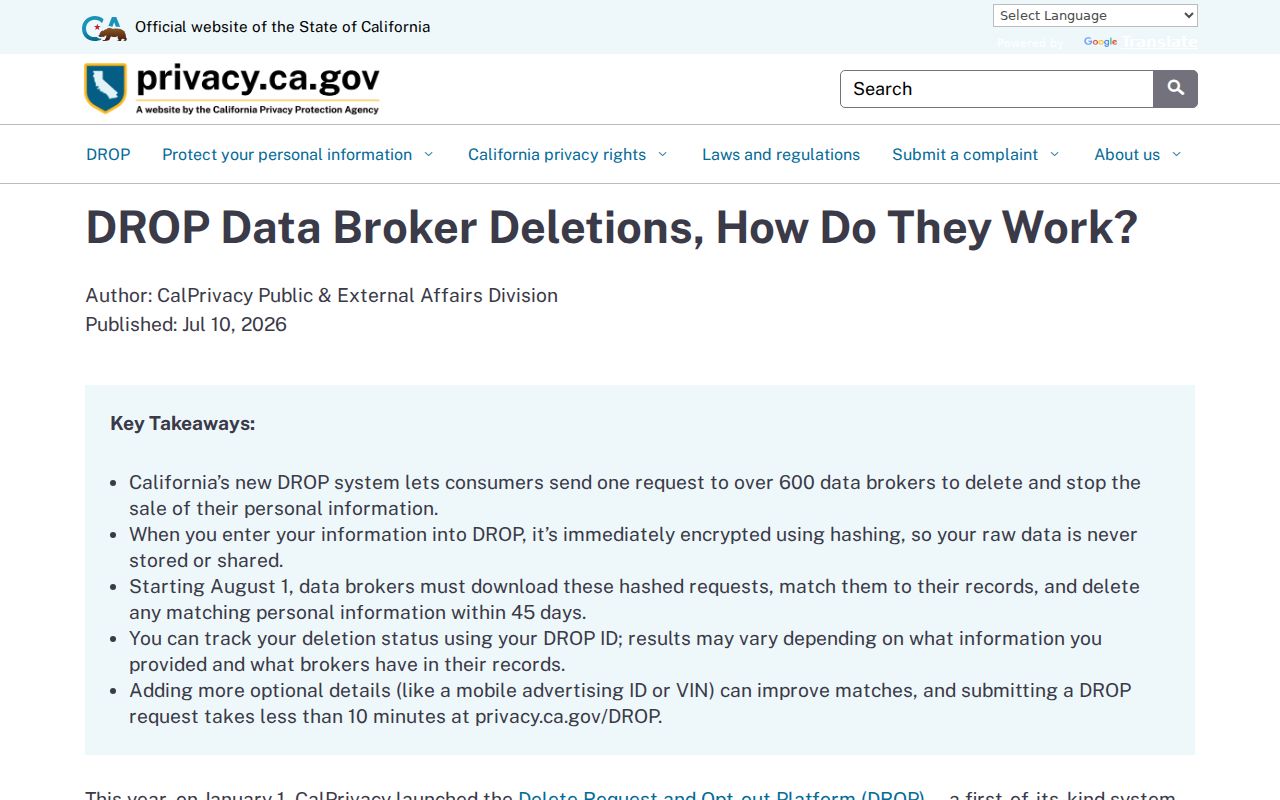
A deletion request changes a broker’s handling of covered data. It does not turn a ZIP, parcel, or public record into a private source of household information.
Rancho Palos Verdes Neighbor Lookup Limits
California’s Safe at Home address-confidentiality program can protect qualifying victims, survivors, and specified reproductive-health participants through substitute-address and mail-forwarding rules. The Safe at Home program is not a promise of retroactive internet erasure. A suppressed or substitute address should not be reverse-engineered.
DMV personal information is restricted by the federal Driver’s Privacy Protection Act (DPPA). Minors, utility customers, delivery records, and other private household data remain outside the official block method. A public parcel, permit, or voter clue cannot be used to fill those gaps by guesswork.
Megan’s Law may be consulted only as a public-safety resource with its own warnings and use limits. It is not a neighborhood directory or a license to contact, follow, threaten, or harass anyone.
The official California Megan’s Law site provides the public safety search route.
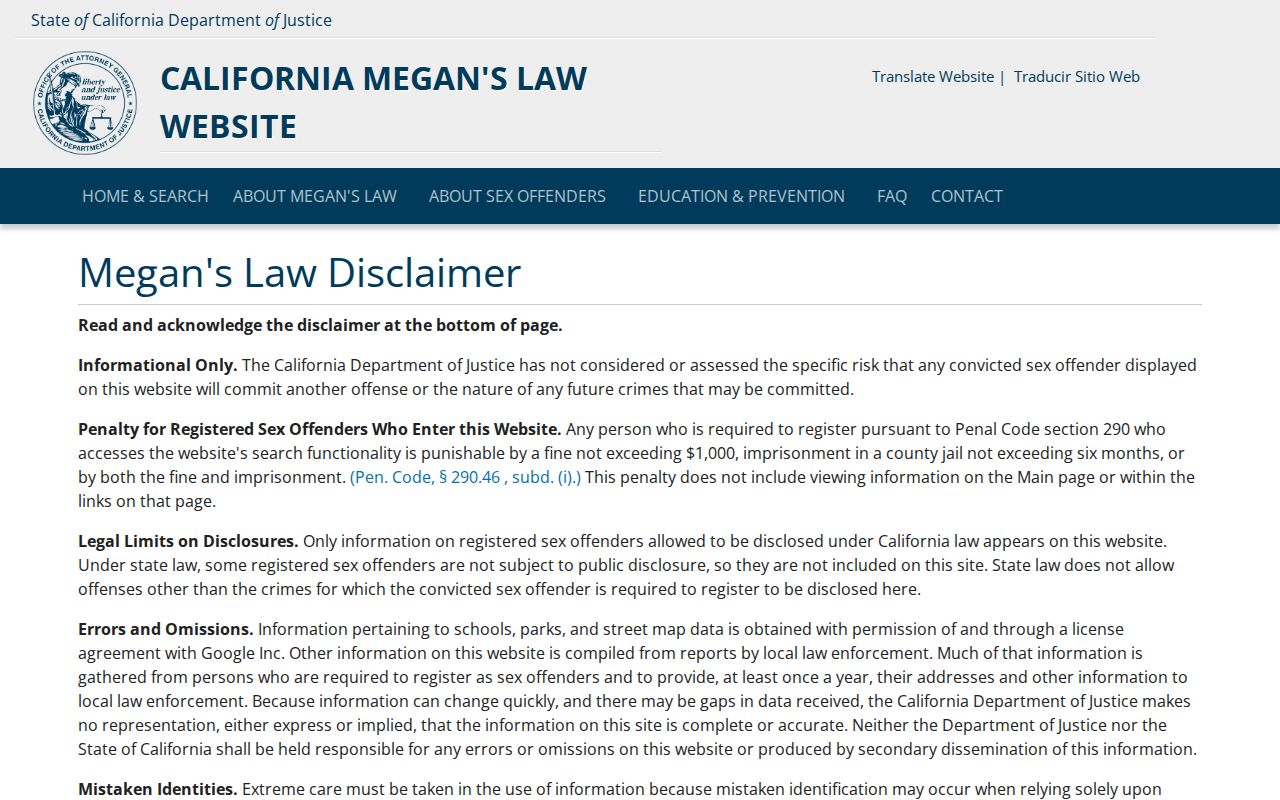
Use any public-safety result with care, verify the source and date, and keep it separate from a claim about who lives on a Rancho Palos Verdes block.
Lawful use. Neighbor research is appropriate for getting to know a block, reconnecting with a past contact, family history, civic awareness, and personal safety. Never use a record to stalk, harass, intimidate, or expose a protected person.