
Rancho Palos Verdes City Directory Shelves
The Palos Verdes Library District Local History Center is the main home for the Rancho Palos Verdes city directory record. Its Peninsula-wide scope matters because the city incorporated in 1973. An older name may be filed under Palos Verdes Peninsula, Lomita, San Pedro, Torrance, or a postal exchange instead of the modern city name. The collection is strongest when a directory is paired with a newspaper, census schedule, yearbook, deed, or family file rather than treated as a complete resident list.
| Collection | Years | Where Held | Access |
|---|---|---|---|
| Peninsula and beach-cities telephone books | As early as 1932; full run unpublished | PVLD Local History Center | Noncirculating; ask staff for years and reverse sections |
| Palos Verdes Bulletin | 1924-1931 scans; intermittent 1932-1933 and 1941 material | PVLD digital repository and Center | Early scans online; confirm later holdings |
| Palos Verdes Social Review and Review | 1962-1993 | PVLD Local History Center | Local serial holdings; consult in person |
| Peninsula People | 1996-present | PVLD Local History Center | Community serial and photograph holdings |
| Palos Verdes Peninsula News | 1937-present; 1937-1967 digitized | PVLD and California Digital Newspaper Collection | First thirty years searchable online; later clippings and holdings |
| Yearbooks, maps, photos, and oral histories | Various local dates | PVLD Local History Center | Catalog or docent assistance; reproduction rules apply |
The public finding aids do not publish an exact publisher-by-publisher run for every city directory, nor do they prove which years contain a reverse street section. Missing years should stay marked as unknown. Ask the archivist for a shelf inventory before naming a publisher, a criss-cross sequence, or a final printed year. The same caution applies to any claim about a scanned page: the online descriptions establish that collections exist, not that a particular resident entry is visible online.
The Palos Verdes Library District projects collection describes the original records, early phonebooks, yearbooks, maps, photographs, clippings, and genealogical material that support a local directory search.
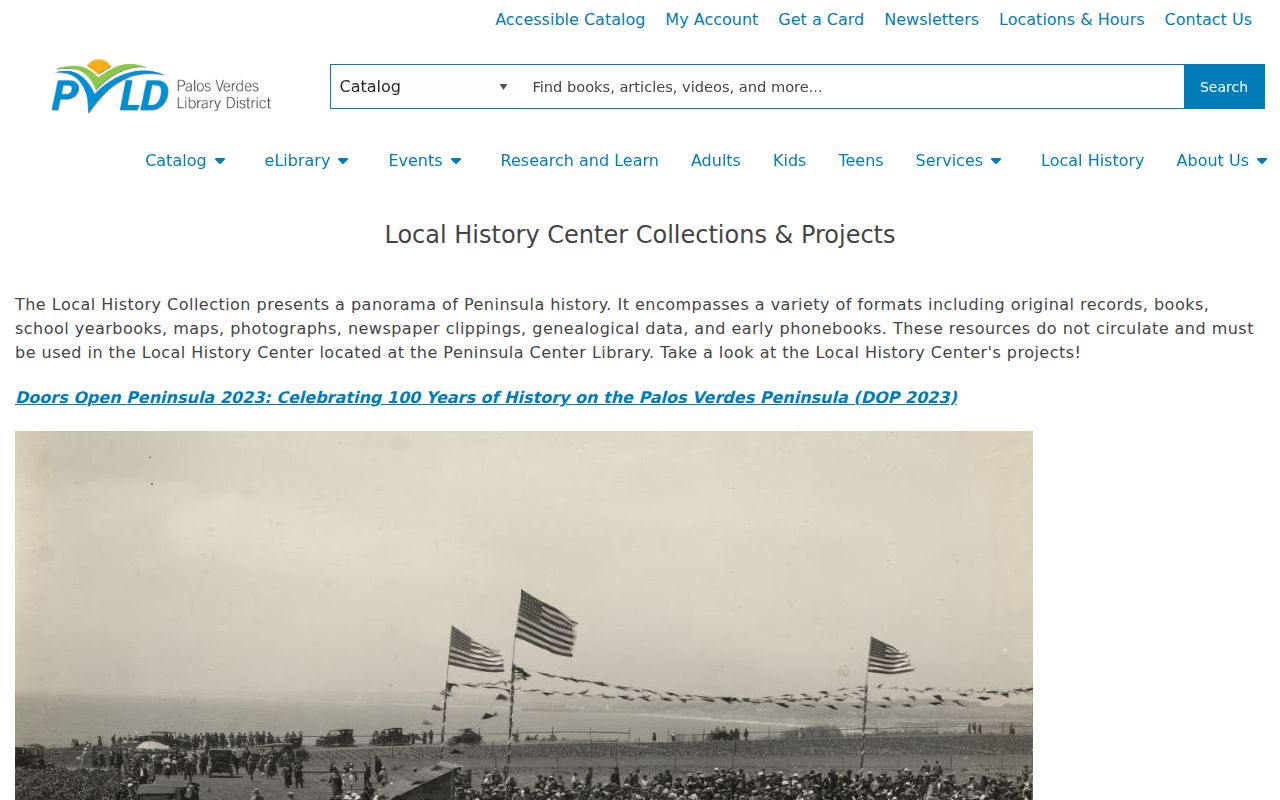
That collection view places a phonebook clue beside the wider source set, which is useful when a name appears in one year but not the next.
Rancho Palos Verdes City Directory Access
Use the Local History Center at Peninsula Center Library, 701 Silver Spur Road, Rolling Hills Estates, California 90274. Posted hours are Monday through Thursday from 1 to 4 p.m. and Friday from 2 to 4 p.m. Appointments are available, including Saturdays, and are highly recommended for a directory request. Materials are noncirculating, so the physical volume stays in the Center while it is consulted.
Call 310-377-9584, extension 291 for the Center, extension 213 for the Archivist or Local History Librarian, and extension 601 for reference. Ask for the exact telephone-book years, any reverse-address section, the relevant Peninsula place label, and the abbreviation key before planning a long search. A staff member can also point to microfilm, newspaper holdings, family files, maps, photographs, and oral histories that do not behave like a name index.
The Local History Center contact page confirms the room's public access details and the extensions that route a directory question to the right staff member.
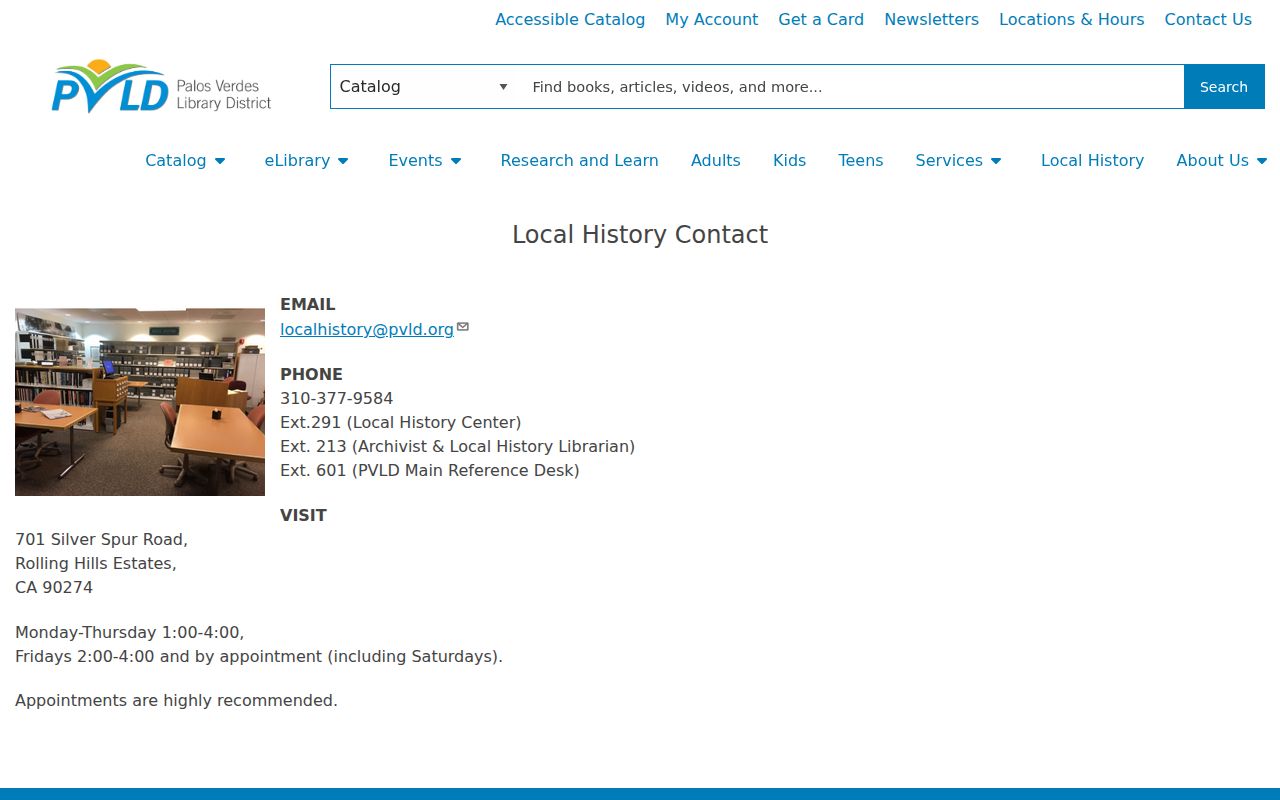
Because the collection is noncirculating, a planned visit is part of the search method, not a last resort after an online search fails.
Note: Older catalog pages can use different collection names because the local-history room moved and was renamed over time.
Rancho Palos Verdes Newspaper Directory Trail
Newspapers fill the spaces between directory volumes. The Palos Verdes Peninsula News began in 1937, and its 1937-1967 run is digitized at the California Digital Newspaper Collection. Search results can also appear under Rolling Hills Herald or Hollywood Riviera Tribune, so a surname search should include those title variants. The Palos Verdes Bulletin offers scans for 1924-1931, with intermittent 1932-1933 and 1941 material. These sources may connect a person to a home, club, school, event, sale, or obituary even when no phonebook entry survives.
PVLD also holds the Palos Verdes Social Review and Review from 1962-1993 and Peninsula People from 1996 to the present. Search a surname with a street, spouse, school, club, or business term, then check the issue date against the person's known era. OCR can miss unusual Spanish surnames, initials, married names, and Japanese names affected by wartime name order or anglicization. A clipping is a lead. A date, address, and independent record are needed before it is used as identity proof.
The PVLD newspaper holdings page identifies the local serials, historic maps, and digitized Peninsula News material that make a newspaper search a practical companion to the city directory.
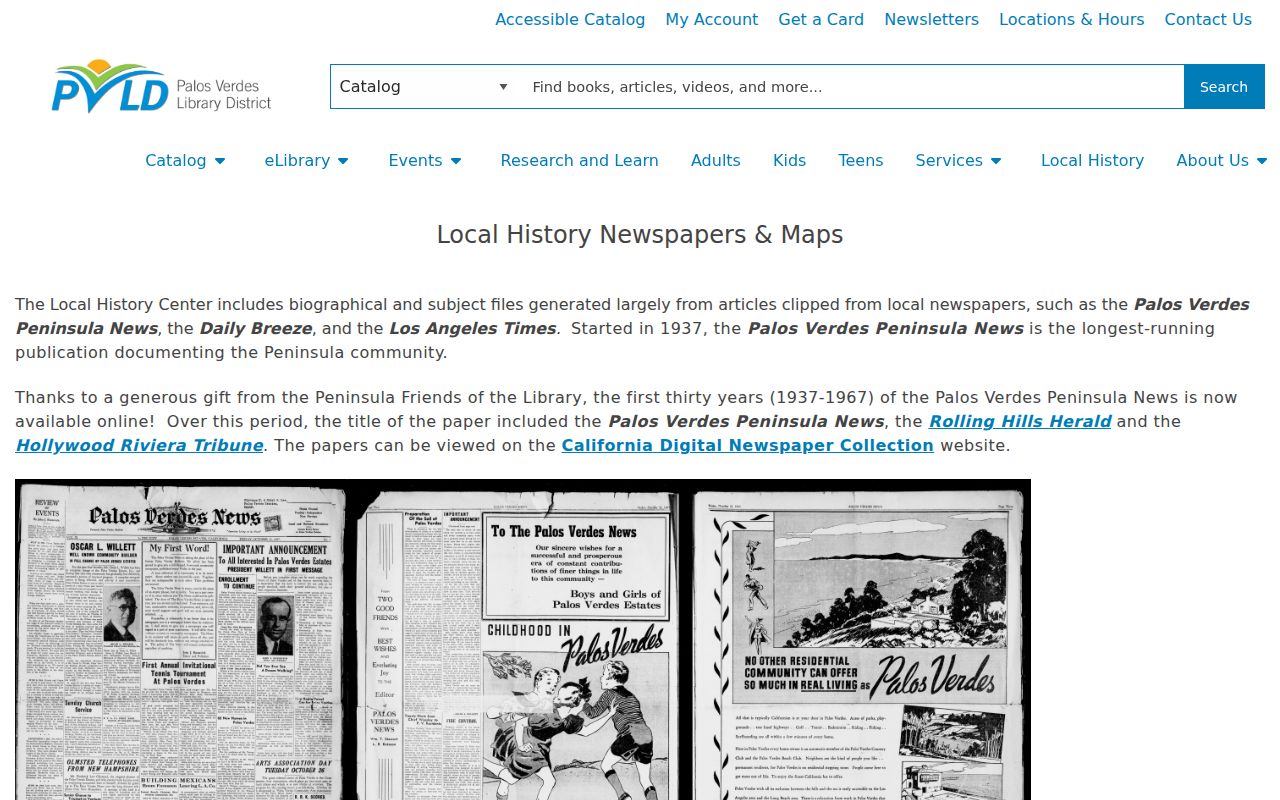
The newspaper trail can anchor a directory name to a dated event without pretending that every person in a household was listed.
Rancho Palos Verdes Telephone Directories Begin 1932
The strongest published date for the local phonebook shelf is 1932. PVLD describes Peninsula and beach-cities telephone books beginning as early as that year, but it does not publish a complete year list, exact publisher sequence, or reverse-directory coverage. A Rancho Palos Verdes city directory search therefore starts by asking staff which physical volume matches the target date and whether that volume has a street-order section.
Do not import a familiar national publisher name into a local result without checking the spine and title page. The same volume may reflect a Peninsula-wide exchange rather than a city boundary. Record the place label, name spelling, initials, telephone exchange, number, and street address exactly as printed. If a reverse section is confirmed, use it as a finding aid for an address. If it is not confirmed, do not call a surname list a street directory.
The PVLD serials description is the source for the verified 1932 starting point and the broader telephone-book shelf.
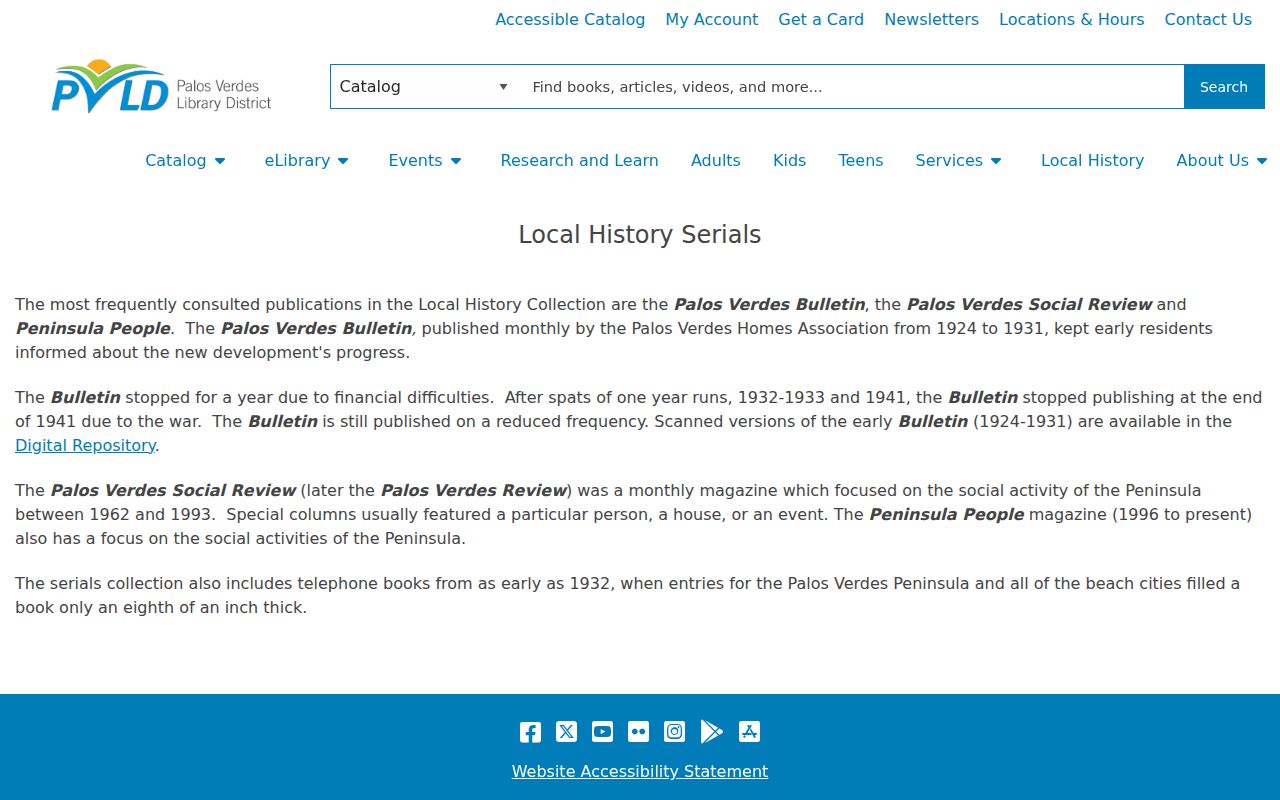
That distinction protects a historical search from a false level of detail: the collection is real, while many entry-level fields still require physical-volume inspection.
Read Rancho Palos Verdes Directory Entries
A sample-entry inventory must separate what the research verifies from what a researcher would expect to find in a phonebook. Remote inspection did not expose a scan of an actual Peninsula entry or an abbreviation key. The table below keeps the boundary visible. It is safe to say that the volumes exist and begin as early as 1932. It is not safe to claim a spouse line, occupation, owner symbol, or reverse address result for a volume that has not been opened.
| Collection fact | PVLD verifies Peninsula and beach-cities telephone books from as early as 1932. |
|---|---|
| Subscriber name or initials | An expected telephone-book field, but the exact local format needs physical-volume verification. |
| Telephone exchange and number | Expected in a subscriber listing; verify the exchange, number, and any local abbreviations in the volume. |
| Street address | Expected as a useful address clue; copy the place label and street spelling exactly from the page. |
| Business classification | Possible in a business or yellow-pages portion; presence and wording require inspection. |
| Spouse, occupation, ownership or occupancy marks | Not verified in the public finding aids. Do not assume these fields or symbols. |
| Reverse section and abbreviation key | Not established by the public descriptions. Ask the Archivist to confirm both before using them. |
- Criss-cross directory
- A reverse arrangement that starts with a street or address instead of a subscriber surname. Its presence in a particular Peninsula volume still needs staff confirmation.
- Householder index
- A name-oriented finding aid for people associated with a household or address. It should not be assumed to list every occupant.
- Abbreviation key
- The volume's own explanation of shortened words or symbols. Locate it before interpreting an address, role, or business line.
Note: A phonebook subscriber is a listed account clue, not automatic proof of every person who lived at the address.
Rancho Palos Verdes Entry Field Checks
Historical labels are part of the entry check. A pre-1973 listing may use a Peninsula community, tract, postal city, or nearby place name even when the parcel later falls inside Rancho Palos Verdes. Keep the original label beside the modern one. The city name, an address line, and a person name can all change at different speeds.
Compare the entry with a dated newspaper, census household, yearbook, or land record. A disappearance can mean a move, death, an unlisted telephone account, a changed surname, a missing volume, or a place-label change. Those possibilities cannot be resolved by a blank line. They require a second source and a date. When an entry suggests an address, use the Assessor and recorded instruments for title questions, while keeping subscriber, titleholder, and occupant as separate roles.
Research boundary. Ask PVLD staff to inspect a 1932 volume and any later reverse section before describing exact publishers, symbols, or household fields.
Rancho Palos Verdes Bixby Family Records
The Bixby Papers extend the local resident trail before a modern Rancho Palos Verdes city directory could exist. PVLD preserves the 1840-1888 material on microfilm, including an index and abstracts for land transactions, court proceedings, mortgages, and tax entries. The abstracts follow ownership from the Sepulveda-era Rancho de los Palos Verdes through Jotham Bixby and toward Frank Vanderlip's 1913 acquisition. Legal descriptions and party names are more useful here than a present-day street search.
The Palos Verdes Project collection adds brochures, letters, promotional material, original deed restrictions, and bulletins. E.G. Lewis papers document early financing and photographs. The Forty Families History Project adds a human record of Japanese Peninsula farming families from 1906 until wartime removal in 1941. That abrupt break is historical context, not evidence that a particular family simply moved away. Use land papers, census material, newspapers, and community files together.
The PVLD ephemera collection description identifies the Bixby Papers and related Peninsula project manuscripts that bridge land history and family research.
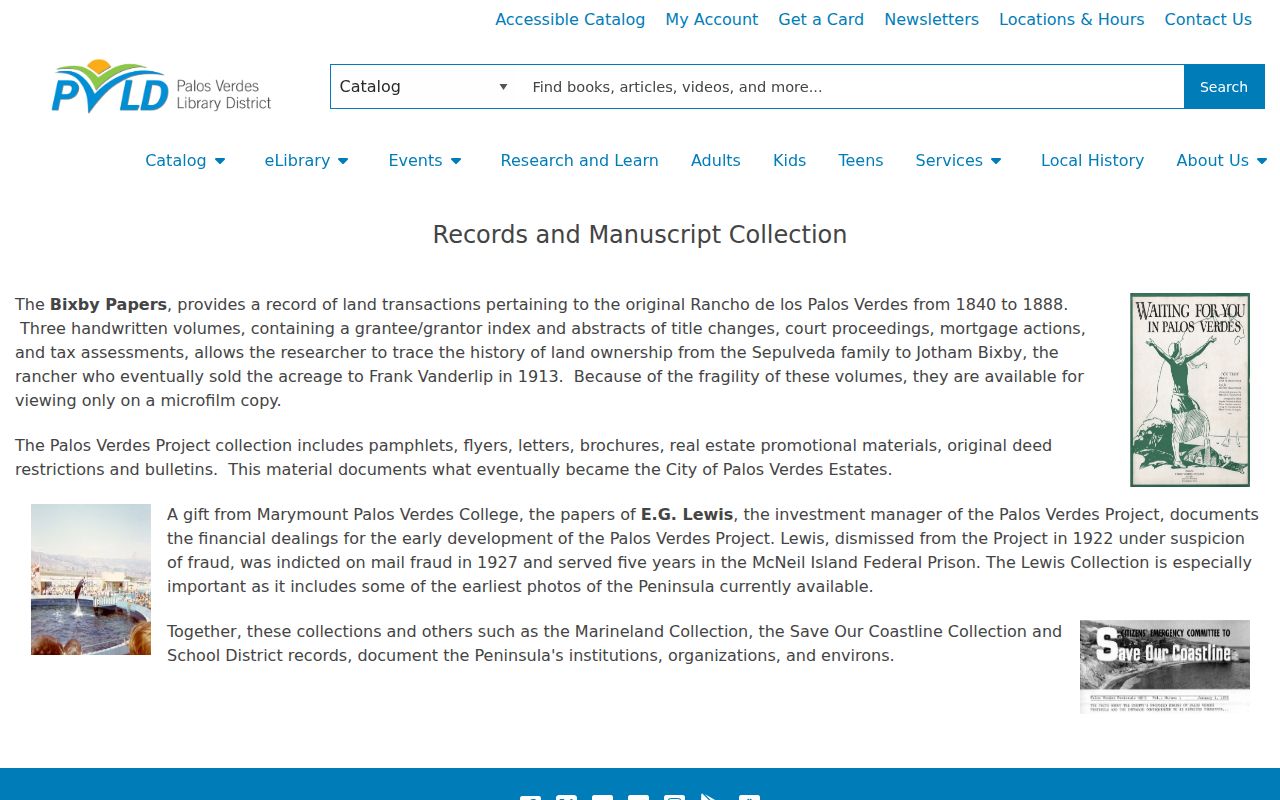
Microfilm fragility means the Bixby route is a careful archive visit, but it can explain a land reference that disappears from later directory language.
Rancho Palos Verdes Genealogy Notebooks
PVLD's genealogy shelf contains eight large notebooks built around families found in the 1930 federal census. It also has pre-1930 ranch-family files for Phillips, McCarrell, and Bixby families, with some three-generation material. These files can supply family sheets, articles, and vital facts that a phonebook cannot. The Center also lists federal census film for California 1860, 1870, and part of 1880; later schedules can be located through NARA census research guidance and library databases. These are local research aids, not a complete directory, so note the source and ask a docent how a surname was compiled.
Yearbooks add a school and classmate route. The Center reports complete sets from three public high schools, many Chadwick volumes beginning in 1940, Rolling Hills Preparatory volumes from 1985-2005, and Palos Verdes Intermediate volumes from 1991-2001. The obituary index currently covers 2000-2007 while additional years are added. Its possible fields include name, age, birth and death dates, obituary date, mortuary or cemetery, and printed survivors. Verify a vital event with the county or state custodian when proof is needed.
The PVLD genealogy collection page identifies the census notebooks and ranch-family files that make a local family search more specific than a surname-only lookup.
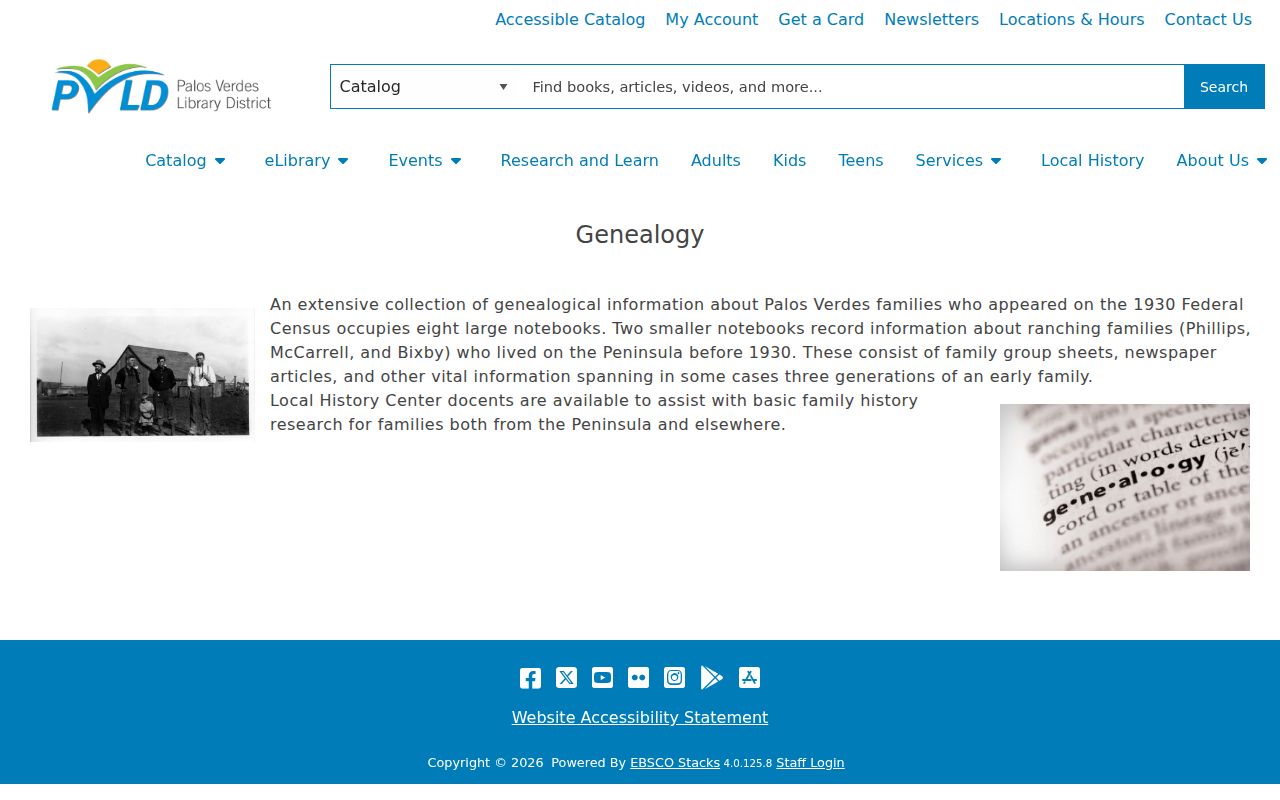
These notebooks are especially useful when a family is present in local history but absent from a surviving telephone volume.
Trace Rancho Palos Verdes City Directories
A household trail works best when each directory year is treated as a dated observation. Start with the most precise name and place label available, then preserve the printed form before normalizing it. Census schedules add fixed household snapshots, while newspapers, yearbooks, deeds, and obituaries explain changes between those snapshots.
- Write the person's full name, initials, surname variants, and the historical Peninsula or postal label that could have appeared in the volume.
- Find the earliest available telephone book and copy the subscriber line, exchange, number, street spelling, and place label exactly as printed.
- Compare the next available volume for an arrival, departure, changed surname, or changed address. Use a reverse section only after PVLD confirms that the volume contains one.
- Pair directory observations with the 1930, 1940, and 1950 census schedules. As of 2026, 1950 is the newest public federal population schedule; 1960 is scheduled for release in 2032.
- Close the trail with the PVLD obituary index, a yearbook, newspaper coverage, probate, or a recorded instrument, choosing the source that answers the specific question.
When a person vanishes from a city directory, test several explanations before drawing a conclusion. A move may appear in another Peninsula address. A death may surface in an obituary or probate file. A missing year may reflect the shelf rather than the family. If a directory clue points to a current parcel, the modern address-keyed trail belongs in the Rancho Palos Verdes street directory. When the goal is to verify one person across current records, use the Rancho Palos Verdes resident lookup workflow and keep the historical clue's date visible.
Rancho Palos Verdes Directory History Timeline
The history of the collection explains why a Rancho Palos Verdes city directory search moves among local, Peninsula-wide, county, and state sources. The modern city is only one layer of the record. PVLD's own institutional timeline also explains why older catalog references may point to a different room name.
| 1840-1888 | Bixby Papers abstracts preserve land, court, mortgage, and tax history on microfilm. |
|---|---|
| 1923 | A Malaga Cove real-estate rally launched the Peninsula's modern development project. |
| 1932 and after | PVLD verifies Peninsula and beach-cities telephone books from as early as 1932. |
| 1937 and after | Palos Verdes Peninsula News begins; 1937-1967 pages are digitized. |
| 1969 | Librarian Jo Williams began the local history collection effort. |
| 1985 | The collection moved to Malaga Cove Library. |
| 2002-2003 | An archival evaluation preceded a permanent Local History Room at Peninsula Center. |
| 2015 | The collection received the name Local History Center. |
That timeline keeps the 1973 city incorporation in perspective. Earlier names belong to the Peninsula project, county records, postal communities, and neighboring places. A good city directory search follows the record's own era instead of forcing every source into the present municipal label.